
From prison
to purpose.
A continuous, vertically integrated system rooted in servant leadership, beginning with character formation and education inside TDCJ and walking alongside graduates long after release.
Entrepreneurship is about more
than Starting a Business.
The goal is not to produce as many entrepreneurs as possible.
The goal is transformation.
PEP utilizes the instruction of entrepreneurship as a vehicle for transformation,
whether a person becomes one or not.
You might say entrepreneurship is not a noun so much as it is a verb -
a way of thinking - in work and in life.
As a result PEP celebrates the man who starts a business
as well as one who works in the business of another,
because every good business is made up of people who think like entrepreneurs.
PEP's model is not a collection of standalone services but a single, connected journey. Every phase builds on the last: digital formation unlocks readiness, in-prison programming deepens character, reentry services stabilize the critical first 90 days, and post-release entrepreneurship converts transformation into lasting economic participation.
Three phases. One mission.
PEP meets people where they are — whether inside prison, at the gate or years after release.
- Transformation begins long before release. Our Formation + Education pathways meet men and women at every point in their incarceration — whether they’ve just arrived, are years from parole, or are preparing to walk out the gate.
- The foundation starts inside. Through a digital character formation curriculum available on a closed-circuit tablet computer to all 134,000+ men and women in TDCJ. Every incarcerated person has access to the same framework for personal growth, regardless of their unit, sentence length, or eligibility for other programs.
- For those ready to go deeper, our Incentivized In-Prison Housing creates a different kind of community inside the prison itself (currently operating in male facilities only). Men voluntarily choose to live alongside others committed to a shared standard in an intentional living and learning community. Here, they learn to lead with integrity, resolve conflict, and build the relationships that sustain change.
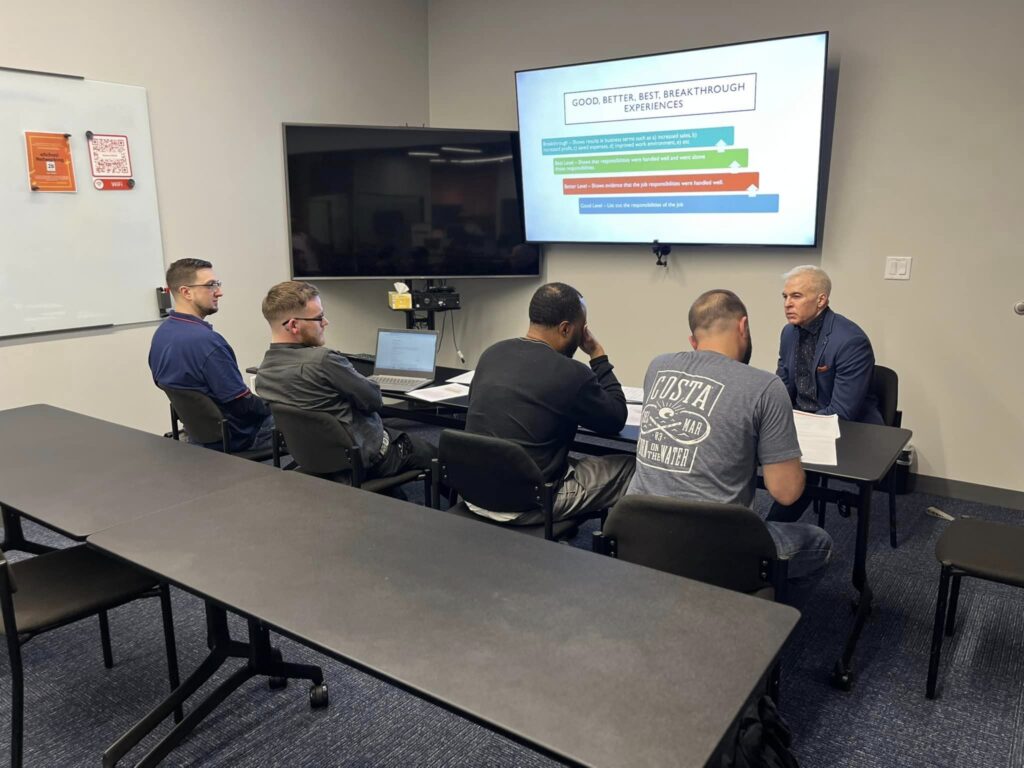
- The Core Program is the flagship: a Baylor-recognized business education that culminates in a Business Plan Competition. Every man who completes the program is invited to return as a Servant Leader, coaching the next cohort from within.
- The gate is not the finish line. It’s the starting line. Our reentry team meets graduates at the gate, with housing secured, a plan in hand, and a relationship already in place.
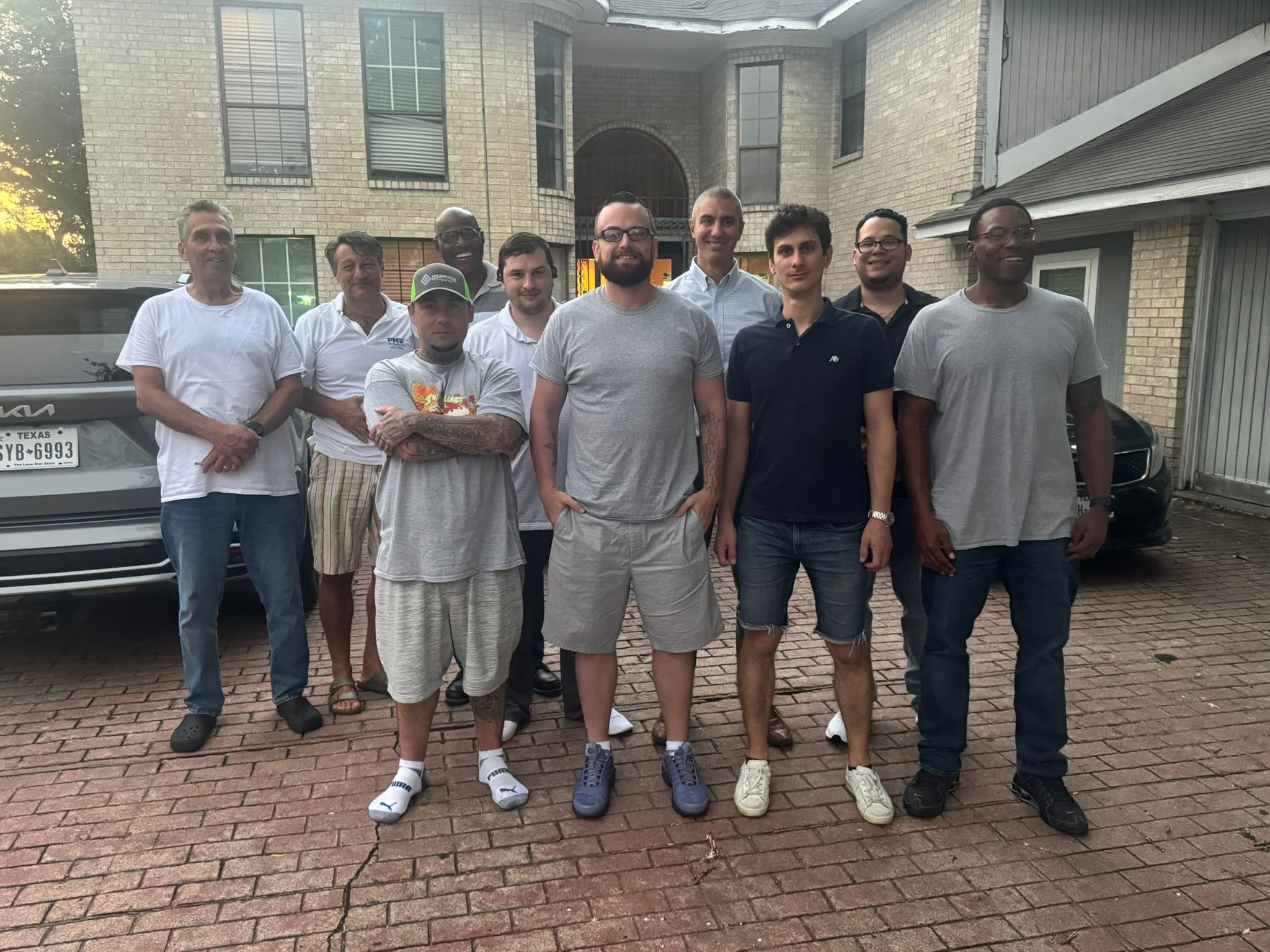
- Men move into transitional homes in Houston and Dallas designed not just for safety, but for culture — households with standards, accountability, and community built in.
- In the first 90 days, every graduate moves through a 12-week program in life skills and business literacy: practical, structured preparation for the life they’ve been building toward.
- Roughly 1,000 executive volunteers a year enter our network — and they don’t just write checks or give talks. They become mentors. They become employers. They become investors. They sit across the table from the same men they’ve been walking alongside in prison and say, I believe in your transformation and want to see you grow.
- As alumni move from stability into opportunity, Entre Capital provides the financial bridge — funding the businesses that men have spent years preparing to launch. This is not charity. It is investment.
- As our alumni network grows, so does its power — men who were once being mentored are now doing the mentoring, opening doors, and deploying capital for the men coming behind them. This is how change compounds.
Online
PEP's digital character formation experience, delivered through the Edovo tablet platform to every eligible incarcerated individual in TDCJ — regardless of security classification, sentence length, or proximity to discharge. For the first time, PEP can reach all 134,000+ people in the Texas prison system.
- Available self-paced to all TDCJ inmates — no transfers, waitlists, or staff mediation
- Filters and prepares applicants before high-touch resources are deployed
- Feeds directly into Incentivized Housing and Core Program admissions


Incentivized
Housing
Incentivized Housing changes how he lives. Men in this pathway voluntarily opt into a values-structured residential environment inside the prison itself — held accountable not by policy alone, but by peers who chose the same standard. It serves men who may never qualify for CORE while also strengthening the pipeline of those who will, sending men into the Core Program who have already lived the values and are ready to deepen them. Operating now in Texas, this pathway is positioned to scale to 40,000+ participants nationally as incentivized housing units expand across state systems.
- Voluntary, peer-accountable residential community inside the prison
- Serves men ineligible for CORE while preparing those who are
- Operating now in Texas; designed to replicate as states expand incentivized housing units

Core
Program
PEP's highest-intensity formation experience and the gold standard of criminal justice programming in America. The Core Program combines Toastmasters, a Baylor University-recognized entrepreneurship curriculum and mentorship from executive volunteers, culminating in a Shark Tank-style Business Plan Competition.
- Baylor University-recognized mini-MBA curriculum
- Business Plan Competition: team-based, executive-judged, Shark Tank format
- Toastmasters certification and professional communication training
Reentry
Services
Nearly half of all returns to prison happen within the first 90 days of release. Most people walk out with $50 and a bus pass — no housing, no plan. PEP's Reentry Services are designed to meet that moment. Life Caddies, who are case managers with lived experience of the reentry process, meet graduates at the gate.
- Life Caddies meet participants at release with immediate practical support
- Transitional housing in Houston and Dallas
- Education for life skills: budgeting, goal-setting, interviewing, and job search
Transitional
Housing
Phase Two — Stabilization
A man who does not know where he will sleep tonight cannot focus on building a business, maintaining employment, or staying connected to a community. Transitional housing is not a support service layered on top of the reentry process — it is the foundation on which everything else rests. PEP's transitional housing provides structured, values-based residential environments for high-risk graduates who lack the stable family support needed to navigate reentry independently. Residents live under a consistent structure: shared accountability practices drawn from PEP's formation culture, weekly formation groups, employment requirements, and regular check-ins with case managers.
- Structured, values-based residence with accountability check-ins and weekly formation groups
- Employment requirements and curfew frameworks — standards, not surveillance
- Available in Houston and Dallas; expanding to Austin / San Antonio
- Near-term: partner-facilitated through faith-based networks and mission-aligned operators
- Long-term vision: owned, mixed-use PEP Centers co-locating housing, post-release programming, and entrepreneurship workspace
; ?>)
Family
Restoration
Of the men we serve, 47% are parents. Incarceration doesn't just affect the one who's in prison — but also the children, partner, and community. Men with strong family connections have better reentry outcomes, and PEP is built around that reality.
- Family Liaisons at Lychner and Estes Units provide support to families
- Reentry plans built with family stability as a primary metric
- Alumni community becomes an extended family network
Post-Release
Entrepreneurship
Formation built inside prison is only as durable as the environment a man returns to. PEP's post-release entrepreneurship program is where everything built inside — the values, the business training, the executive relationships — meets the real world. Through community hubs in Houston, Dallas, and (eventually) Austin/San Antonio, graduates step into an ongoing environment of peers, mentors, and opportunity. Executive volunteers, the same men and women who mentored them inside, continue those relationships outside, as employers, advisors, and investors. On any given day, that community functions simultaneously as a business accelerator, an employment hub, a mentorship network, and a continuing formation environment. The goal is not just 90 days of support. It is an indefinite community — one that compounds over time as the men who were once being mentored become the mentors, as the graduates who once needed jobs become the employers, and as the alumni who once launched businesses with Entre Capital become the investors backing the men coming behind them.
- Community hubs in Houston and Dallas operating now; Austin/San Antonio expanding
- Peer cohorts, executive mentorship, pitch events, and job placement — ongoing, not time-limited
- Open to graduates of all three pathways — intensity of engagement scales with formation depth
- Alumni cycle back as mentors, employers, and investors, compounding the community's reach

Entre
Capital
Founded in 2019 as the only Community Development Financial Institution (CDFI) in the nation exclusively serving returning citizens, Entre Capital provides growth financing from $2,500 to $200,000. But capital is never deployed alone — every loan is paired with mandatory coaching, reporting requirements and clear performance benchmarks.
- Microloans for working capital; larger loans for equipment and vehicles
- Milestone grants tied to demonstrated business progress
- Mandatory one-on-one coaching focused on cash flow and growth

Be part of the solution.
PEP's programs work because of people who believe in them — volunteers who show up, donors who invest, and employers who open their doors.