
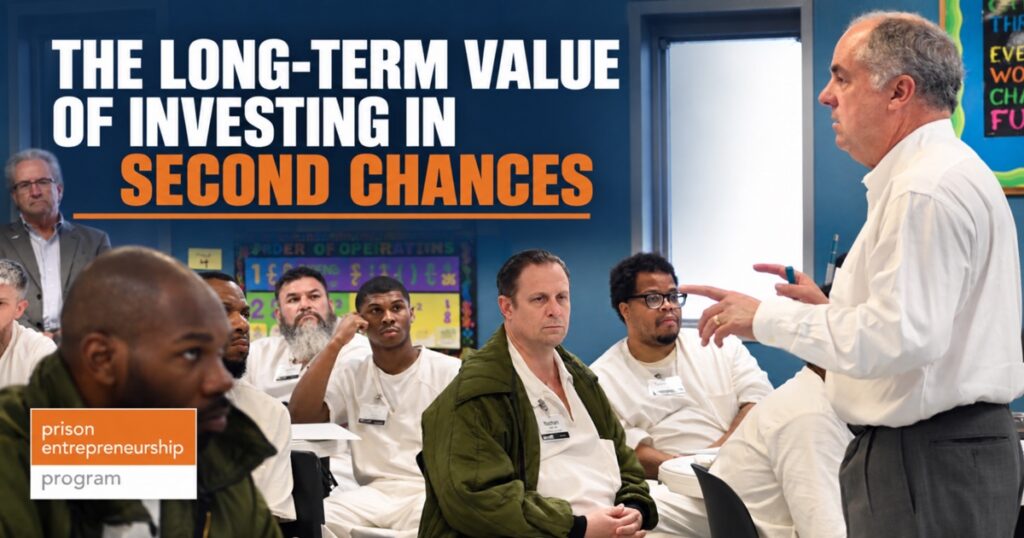
Looking Beyond the Immediate Impact
Second chances are often discussed in terms of individual transformation. While personal growth is important, the value of investing in second chances extends far beyond one person.
When individuals are given the opportunity to rebuild, the effects can be seen across businesses, communities, and local economies. These outcomes develop over time, creating long term value that is often underestimated.
Understanding this broader impact changes how second chances are viewed.
Reducing Long Term Costs
One of the most measurable benefits of successful reentry is the reduction in long term costs associated with incarceration.
When individuals avoid returning to prison, it reduces the financial burden on public systems. Resources that would have been spent on incarceration can be redirected toward education, infrastructure, and community development.
This creates a more efficient use of resources.
Strengthening the Workforce
Investing in second chances expands the workforce. Many returning citizens are ready to work, learn, and contribute.
When given the opportunity, they can:
- fill critical labor gaps
- bring strong work ethic and determination
- contribute to productivity
This strengthens businesses and supports economic growth.
Encouraging Economic Participation
Employment and entrepreneurship both contribute to economic activity. Individuals who are working or building businesses generate income, pay taxes, and support local economies.
This participation creates a ripple effect that benefits communities as a whole.
Economic inclusion leads to broader economic stability.
Supporting Business Growth
Companies that invest in second chance hiring often benefit from increased retention and employee engagement.
These organizations gain access to a talent pool that is often overlooked. They also contribute to a more inclusive workforce.
Over time, this approach can strengthen company culture and performance.
Improving Community Stability
Stable individuals contribute to stable communities. When people have access to opportunity, they are more likely to build consistent lives and support those around them.
This can lead to:
- reduced crime rates
- stronger neighborhoods
- increased community engagement
Community stability is a long term benefit of second chance investment.
Creating Generational Impact
The impact of second chances does not stop with one individual. Families benefit when stability is achieved, and future generations are influenced by that change.
Children who grow up in stable environments are more likely to have access to opportunities and make positive choices.
This creates lasting change over time.
Shifting Perspectives
Investing in second chances also changes how society views rehabilitation and potential. It moves the focus from past mistakes to future contributions.
This shift encourages more inclusive policies and practices.
Changing perception is part of creating sustainable progress.
A Long Term Investment in Growth
Second chances are not short term solutions. They are long term investments in people, communities, and systems.
The returns may not always be immediate, but they build over time and create meaningful outcomes.
Building a More Inclusive Future
When individuals are given the opportunity to rebuild, they contribute in ways that benefit everyone.
Investing in second chances creates stronger economies, more stable communities, and better long term outcomes.
It is not just a social decision. It is a strategic one.