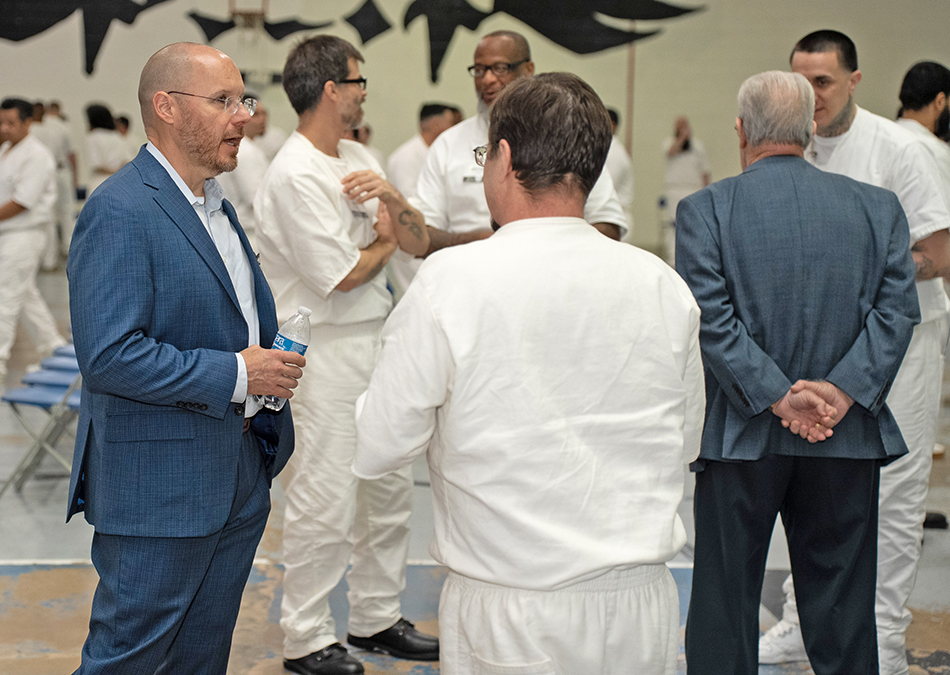
Dear PEP family and friends,
Over the past six months, I have received many great suggestions but one consistent message: communicate often and reinforce the PEP culture. Of course, much has changed in six months. Originally hired as PEP’s Chief Development Officer, I now find myself serving as the CEO (no longer interim as was made permanent at our most recent board meeting).
The day after I was asked to take on this task, I wrote the following thoughts to the staff, which I think are appropriate to share with all of you now:
I came to PEP as a person compelled by its mission. The title didn’t matter. In my life, I have held many titles, sometimes I was elevated, and other times I was asked to step down – that was how it went in a religious order. You were bonded by mission, lived by a motto, and practiced particular values. I was taught, and lived, understanding that everything is a gift which you were to steward for a particular time, so that that gift could be transformed and increased and passed on to others.
For 20 years, I lived according to the motto of the Basilian Fathers: “Teach me goodness, discipline and knowledge”, which comes from Psalm 119. Though I am no longer Basilian, I was formed by that motto and it guides so much of who I am even now.
As you well know, PEP has values of its own, which I have quickly grown to deeply appreciate. As reflect on all that is ahead of us, I do so with the values of PEP in mind: fresh start outlook, servant-leader mentality, love, innovation, accountability, integrity, execution, fun, excellence, and wise-stewardship.
Since then, our team has regularly reflected on the 10 Driving Values one by one, and we are still doing so. These values drive our work, and there is a lot of work ahead of us!
By now, many of you have heard of the “scaling plan” or that PEP is beginning to make use of the tablets, leaving many people to wonder what this means? At the end of August, the PEP Board of Directors met with Phi and myself to discuss these plans and I think it helpful to offer clarity to as much of it as I can.
For 21 years, PEP’s mission has been to unite prisoners with business executives, recognizing that both have something to teach the other. This has been, and will be, a bedrock of PEP’s work. The tablet is a tool; it does not change PEP. What it does is expand the reach of opportunity through PEP while at the same offering something of value. Fundamentally, it widens the funnel into the in-person program; which has the same requirements it always has.
However, since not all people who encounter PEP’s program online will be eligible or able to enroll in the in-prison program, PEP is preparing for a more robust re-entry and aspiration program. To be clear, PEP cannot serve everyone, and so we will offer what we do best – a curriculum that works, mentorship, a community, and the opportunity for entrepreneurship – alongside partners who do for others what we cannot do: case management, support services, job training, employment assistance, mental health and addiction counseling, financial counseling and more.
If you have not had a chance to visit our website, I invite you to take some time to watch many of the videos and read the text. We have spent a lot of time and energy capturing the testimonies of the people who define PEP. These stories communicate a culture of belonging, because this is how we measure success. You will never see it directly measured, but be assured that the many metrics PEP communicates – employment, housing, wages increase, businesses launched – are a reflection of how well people learn to belong. It is an important point to remember as we discuss what and how we scale our mission.
I am committed to routine, clear, and direct communication to you all.
At PEP, belonging is the key. Teaching Entrepreneurship is the vehicle. And we all form the container from which we pour out and in which we are filled.
Know that you are welcome to reach me at anytime via cvalka@pep.org. In fact, I would love to hear from you. In the meantime, thank you for all that you do, and all that you are. Thank you for allowing me to share this journey with you. Thank you for expanding the community to which we all belong.
I will close this first submission with a thought from Gregory Boyle’s most recent book, Cherished Belonging, which caused me to think of our work at PEP on every page. He writes that belonging exhibits the bravery of our own curiosity, which will conquer our fears and neutralize our judgments.
Houston Events

October 28, 2025
Big Aspiration Mingle
Provide quality feedback on participants’ business models that will encourage participants to improve and continually develop ideas; to serve as a business coach to further develop business ideas; Networking with participants and other attendees.
October 31, 2025
Big Idea Pitch Event
Round 1: Bell Winter 2026 Business Plan Competion
Judge individual participants on new business ideas from the lens of a consumer (i.e. Is the idea innovative? Is there a market?) Teams will be formed to move forward with the top ideas.
November 25, 2025
Networking Workshop
In conjunction with eSchool, executive volunteers are invited to a monthly networking event with our participants. The event aims to connect you with eSchool participants and support them in developing their vision, creating a resume, leveraging LinkedIn, etc…
North Texas Events
September 30, 2025
Big Aspiration Mingle
Provide quality feedback on participants’ business models that will encourage participants to improve and continually develop ideas; to serve as a business coach to further develop business ideas; Networking with participants and other attendees.
October 17, 2025
Business Plan Competition
Finals: Estes Fall 2025 Business Plan Competition
In the final round, executive volunteers serve as the primary judges, assessing the most viable and well-developed business plans. Judges will decide who the finalists and winner of the competition.
October 28, 2025
Networking Workshop
In conjunction with eSchool, executive volunteers are invited to a monthly networking event with our participants. The event aims to connect you with eSchool participants and support them in developing their vision, creating a resume, leveraging LinkedIn, etc…
PEP CLUBHOUSE BLOG
PEP volunteers are now sharing their voices beyond the classroom in PEP Clubhouse, and they are writing about their experiences with PEP, life lessons, and the issues that matter most.
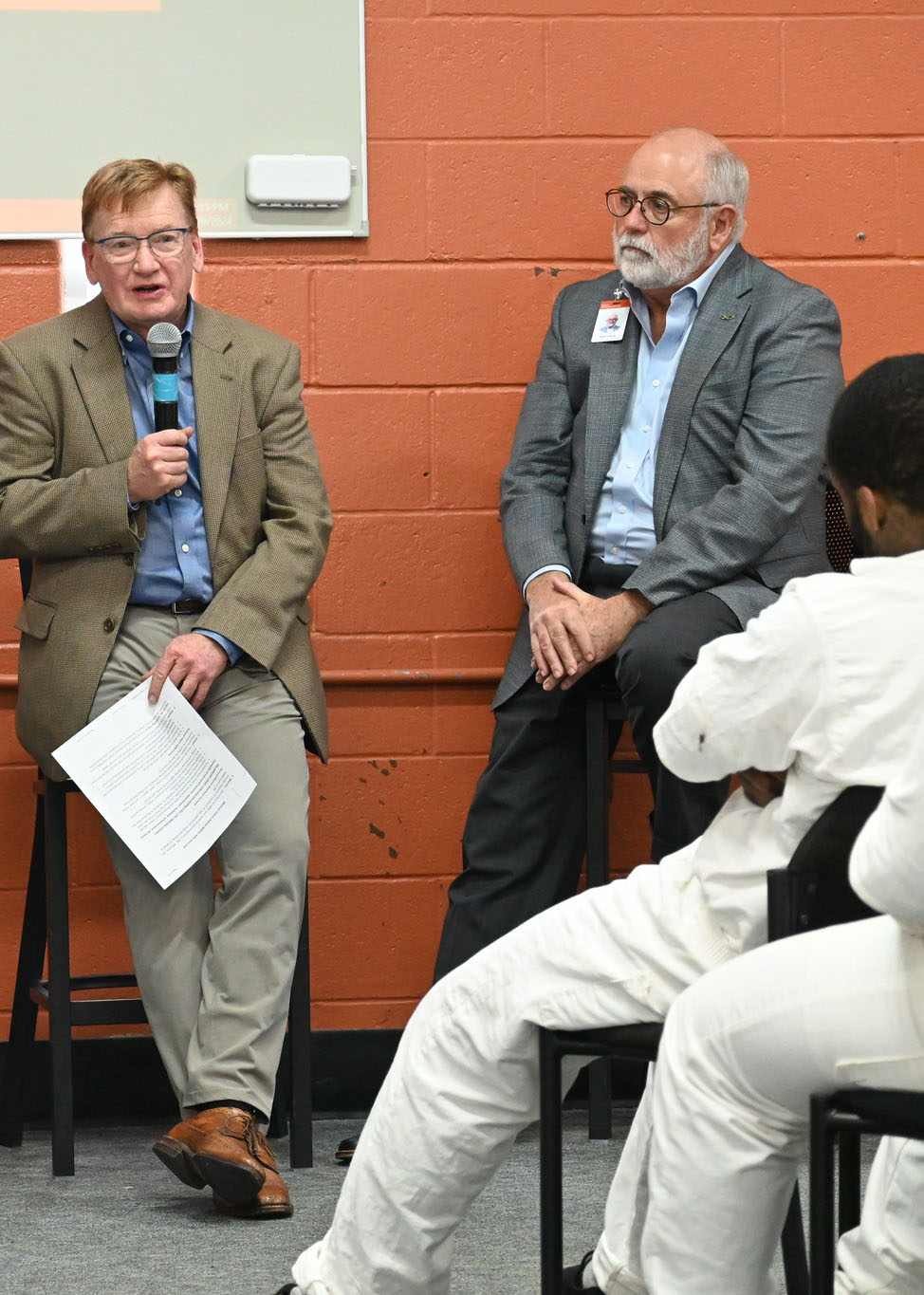
There but for the grace of God…
What I’ve Learned in Prison
My first trip to prison was frightening.
During the hour-long drive to the state facility that sits outside the rural community of Venus, TX, I replayed every prison scene I’d watched on tv or at the movies. Angry, tatted men in white. Their eyes filled with hate, ready to do god-only-knows-what to innocent first-timers like me.
We’ve all heard the stories. And, while some are no doubt true, after 8 years of spending time behind the concertina-trimmed concrete walls these men call home, I’ve come away with a very different perspective of the incarcerated.
My prison time — if you can call it that — has been as a volunteer with the Prison Entrepreneurship Program, https://www.pep.org, a Texas-based initiative designed to help men in prison develop both the life and business skills they need to be successful once they return to, as they call it, “the real world.”
Thus far (the program was started in 2004) results have been good. Of the 3,000 who have graduated, 700 have started their own business, 46 percent have become homeowners, and the recidivation rate is under 10 percent, well below the state average.
But that’s just one piece of the story.
I began volunteering because I believed we could help these young felons, most in their 20s and 30s, overcome the errors of their ways. And, while I think we have, I’ve come to the realization that I have learned far more from them than they have from me.
This insight came after the organization started an initiative called the “Club House” – a 15-week program for those about to graduate to discuss foundational elements of life that we all struggle with, subjects like purpose and vision, building trust and relationships, community and belonging, habits and goal-setting.
For a couple of hours each Wednesday, two or three of us sit down with 40 to 60 men and discuss one of the topics. At first, most are hesitant to engage, but by the second or third week, it becomes a rich conversation among the men and volunteers, with both sides sharing personal stories – some good, some bad, some stupid and some downright silly.
I often leave prison feeling that I’ve been in a good group therapy session, playing the role of both therapist and participant.
That’s because I often find myself on the receiving end of the equation, a privileged old white man learning the true facts of life from young felons, a mix of predominately Latino and African Americans, many of whom have come from broken families and poverty-stricken communities, have themselves suffered violence and experienced a life shaped by the intolerance, bigotry, and ignorance of people of my ilk.
I’d always fancied myself as liberal – intelligent, tolerant, unbiased, accepting, and dare I say enlightened. But what I’ve learned in prison had made me reexamine my self-image, my long-held perceptions, my beliefs and biases.
Three of these lessons stand out:
Lesson 1. The felons I work with are not inherently bad. Yes, they’ve done bad things. But so have the rest of us. The only difference is that if we were caught, we often had the resources — social, financial, family, community – that allowed us to avoid serious consequences. When one of my children, who had been drinking, had a minor automobile accident, my wife came to the rescue before the law arrived. Mom talked to the officer and no charges were filed. That wouldn’t have happened in some neighborhoods, or if there was little parental support, or if, God forbid, the kid was not white.
Lesson 2. The men we work with are every bit as intelligent as me, if not brighter. They ask thought-provoking questions, offer insightful observations and refer to books they’ve read. One young inmate recently told me how much he was learning from reading the works of ancient philosophers. Again, many didn’t have the parental support to keep them in school or lacked family or community role models who could shape their values and aspirations. One of the saddest I’ve heard in prison came from a youthful offender who, when asked what his purpose in life was, replied dejectedly: “Purpose? I’ve never had a purpose.”
What these men lack is social and emotional intelligence: self-awareness, self-control and the understanding of and interacting with others – things like empathy, mindfulness, engaging others and active listening, (which as one young man noted was what he lacked when his grandmother warned him not to go out with his friends because there was going to be trouble. He ignored her, and, as he recalled, “that’s the night I got hung with a murder rap.”)
Lesson 3. We all need to do less preaching and more ministering. We need to stop pontificating and start listening. Earlier this year, my wife asked me why, on the days I went to prison, I came home happier than I was the rest of the week? At first, I poo-poohed her comment. But the more I thought about it, the more I realized she was, as usual, right. Our “free world” these days is not a happy place. We spend much of our lives sucked into the digital quagmire of social media, listening to the bloggers and bloviators, the pundants and prophesiers. And in the moments when we come up for air, we find ourselves arguing with those with whom we disagree, telling them why they are wrong and we are right.
But when I go to prison, when I attend our the clubhouse, we – both the guys in white, and those of us who visit from the real world – listen to each other, are honest with each other, share with each other, and yes laugh with each other.
Even though I’m an outsider, for me it’s community, a good community, the kind I want to be a part of. And truth be told, because I feel a part of it I even got a tattoo, albeit a small one, to prove it: Stfual!
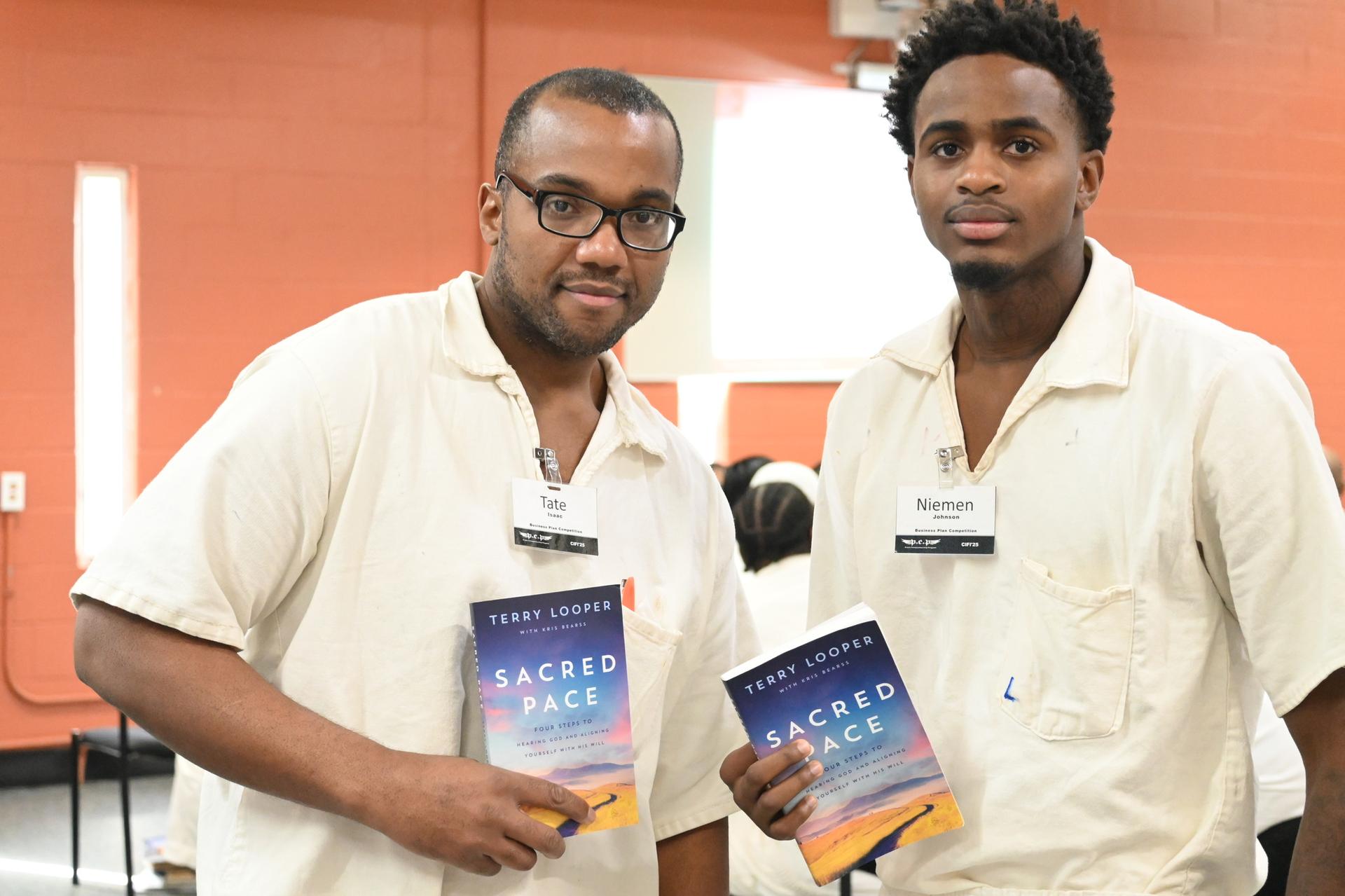
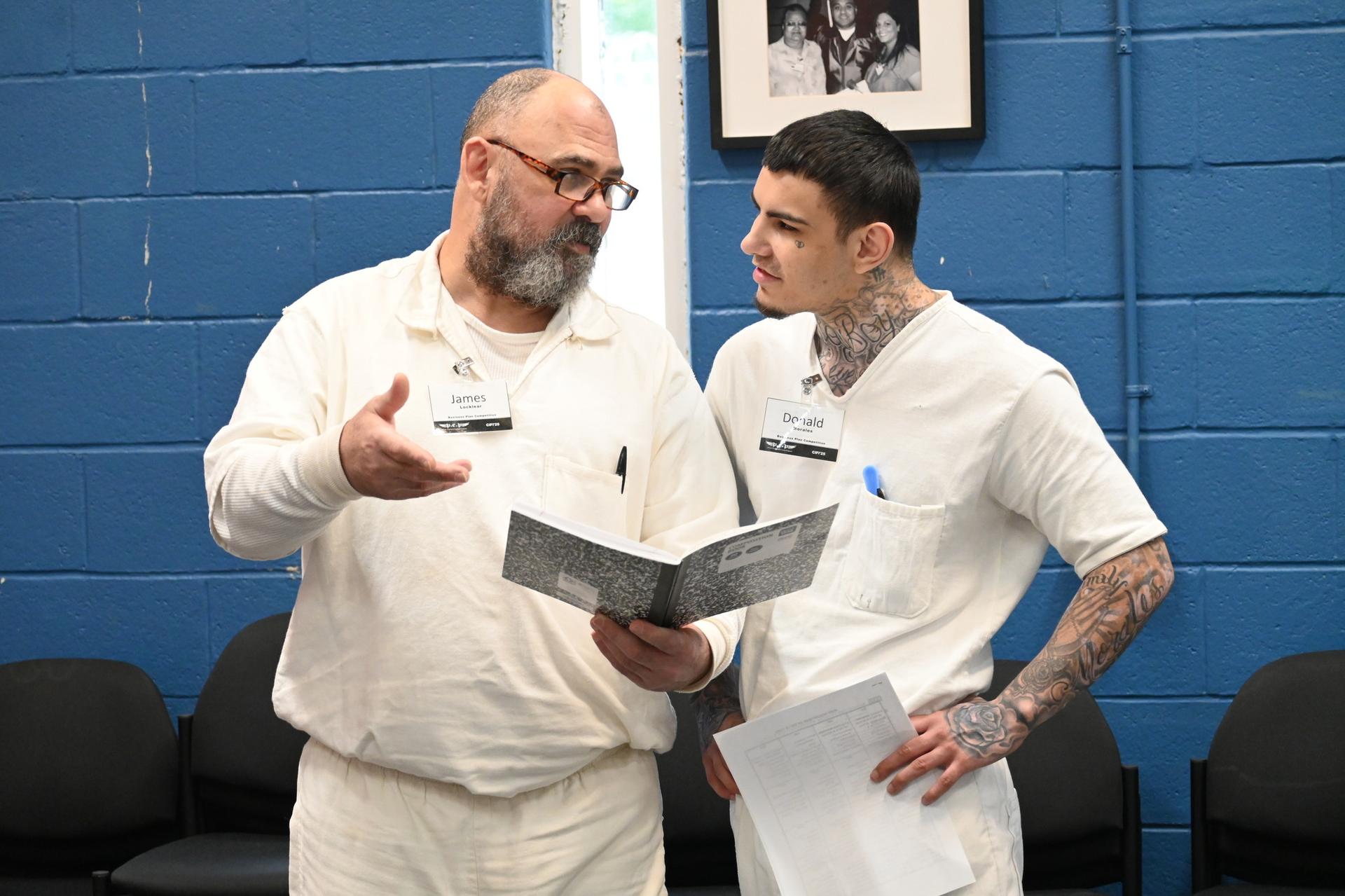
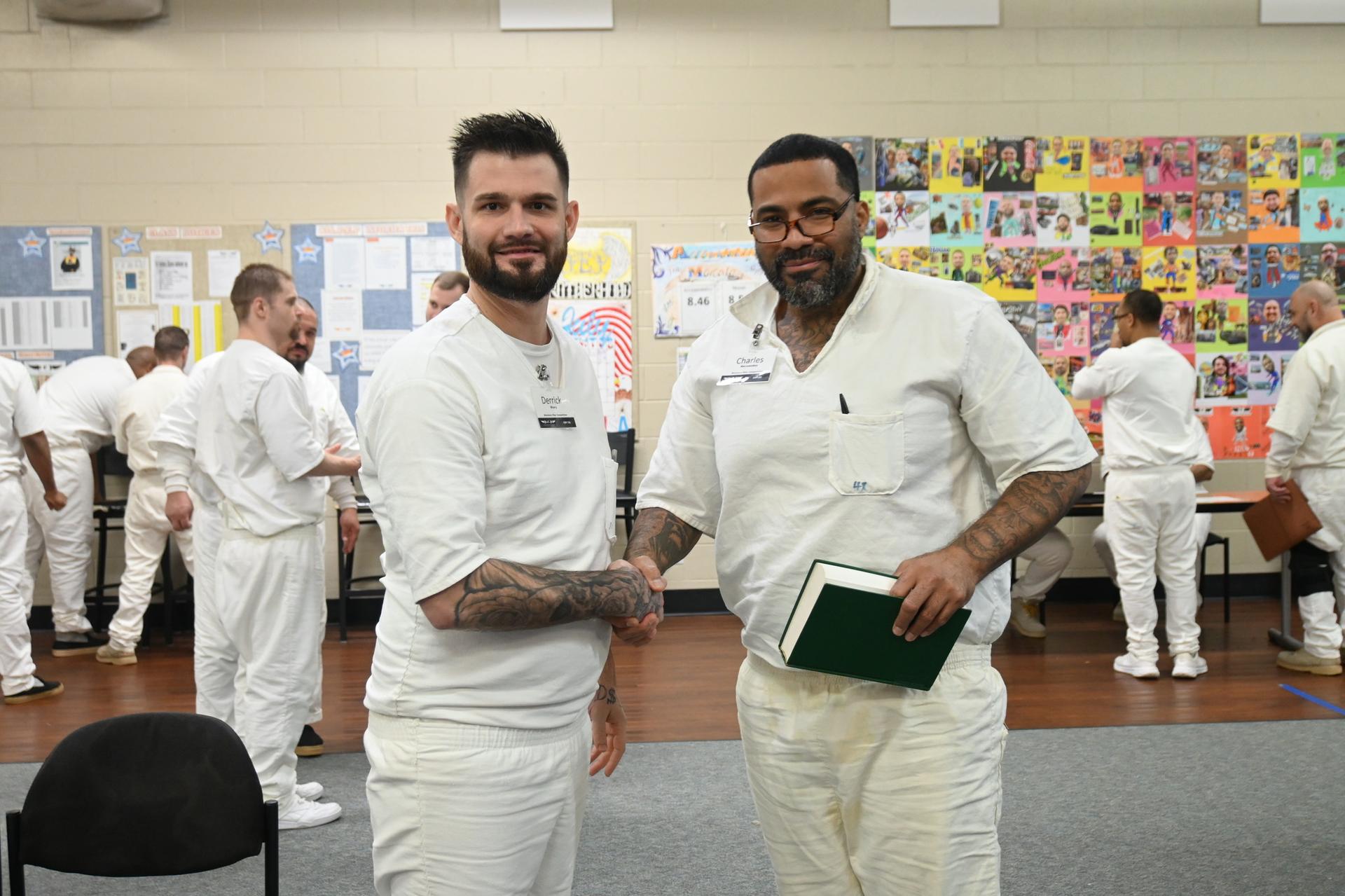
THE PARTICIPANT’S VOICE
The following is the personal journey of Stephen F. through not only through the Clubhouse class, but also one of our core Clubhouse lead-ers—helping lead others through their class/journey.
Since I have become a part of the Clubhouse family, and I say family because that’s exactly how everyone treats each other and that in-cludes facilitators, partici-pants, and executives, I feel that I have grown in many different ways while also being given more knowledge than I had before to take with me to the world. I now understand the value of ac-countability, humility, and hard work. I have grown from a person who reacted without thinking into someone who now seeks wisdom before action. Helping facilitate the Clubhouse program within the Prison En-trepreneurship Program has given me deeper insight into my past deci-sions and the tools to live differently going forward. I am also entrusted with the responsibility of mentorship, helping the new participants grow and transform into better men.
I wouldn’t have been able to have come as far as I have without my brothers helping me strive to be the best that I can be and holding me accountable. I would like to thank all my Club-house brothers/members. Clubhouse is an open forum where participants engage with executives in meaningful discussions aimed at personal and professional development. The purpose is to create a supportive environment that promotes the transformation of participants through renewed thinking and identity building. Clubhouse consists of 15 weeks that deliver 5 sessions of life skills and 10 weeks of leadership skills.
Clubhouse has helped me learn to build relationships, network, find my authenticity, evaluate my habits, my mission vision and values, understand my purpose, understand how important goal setting is, and so much more. Clubhouse has helped me build relationships by coming out of my shell and understand that if I just be myself, and be genuine that I will make more friends in two months being authentic than I can in two years pretending to be someone I’m not. Being able to speak with executives on a weekly basis has helped my networking skills while also overcoming my anti-socialism.
Being authentic is the quality of being genuine, true to one’s personality, values, and spirit. I feel that even if you have talent you can’t succeed without having great habits to execute and fully realize potential. Find-ing my own authenticity was very important to me while trying to find myself but as long as I stayed true to my moral compass I was able to find my own authentic style. I didn’t know but while I was trying to find myself, others were also looking up to me for various different reasons such as being a mentor, to execute tasks given to me, and to simply just leading by example. In order for myself to lead by example I had to self-evaluate myself and understand my habits, and by doing so I could man-age to understand my good habits vs. bad habits. After understanding which habits, I wanted to keep and which ones I needed to take away from my day to day basis I can now lead to the best of my abilities.
Going through these 15 weeks of Clubhouse I feel has truly helped me understand things from a different perspective and I hope as I keep helping facilitate the program I can help others grow as I feel I have. Jeff Humphrey has been there for all of us with great insight, inspiration, and always a helping hand and open heart to anyone that has an open ear or the courage to ask for help. Jeff is someone I personally look up to as a mentor and z I know many others look up to him as well. He is a prime example of someone that can leave behind a great legacy. LMZ is also another volunteer that truly inspires our participants and she shows a true genuineness to help others. We are all very thankful for all the executives that come in to volunteer, not only are they giving us great information and knowledge but they are giving us their undivided attention and time. It shows that Clubhouse is a great community to be able to share, build, and learn all in a positive way towards transformation.
By Stephen F, S‘25